TL;DR: The most accurate home blood pressure monitors are validated by organizations like the FDA or ESH/ESC, use oscillometric technology, and come with a properly fitted cuff. Brands like Omron and Withings are frequently cited for their validated accuracy. Pair any good monitor with proper technique — correct posture, timing, and cuff placement — for readings you can actually trust.
Checking your blood pressure at home sounds simple. Strap on a cuff, press a button, done. But here’s the catch — if your monitor isn’t accurate, you could be making health decisions based on bad data.
That’s a bigger deal than it sounds. High blood pressure often has no symptoms at all. It’s called the “silent killer” for a reason. So the numbers on your monitor might be the only warning sign you get.
More people are managing chronic conditions like hypertension from home these days. It’s convenient, it’s affordable, and it keeps you in the loop between doctor visits. But convenience only helps if the device you’re using actually works.
So what separates an accurate monitor from a cheap one that just looks the part? Let’s break it down.
What Do Systolic and Diastolic Numbers Actually Mean?
Every blood pressure reading gives you two numbers, written like a fraction — say, 120/80.
The top number is systolic pressure. It measures the force of blood against your artery walls when your heart beats. The bottom number is diastolic pressure, which measures that same force when your heart rests between beats.
Here’s a rough guide to what those numbers mean:
- Normal: Below 120/80 mmHg
- Elevated: 120-129 systolic, below 80 diastolic
- Hypertension Stage 1: 130-139 systolic, or 80-89 diastolic
- Hypertension Stage 2: 140+ systolic, or 90+ diastolic
Why does accuracy matter so much here? Because these ranges guide real treatment decisions. A reading that’s off by even 10 points could mean the difference between “keep an eye on it” and “start medication.” That’s not something you want left to chance.
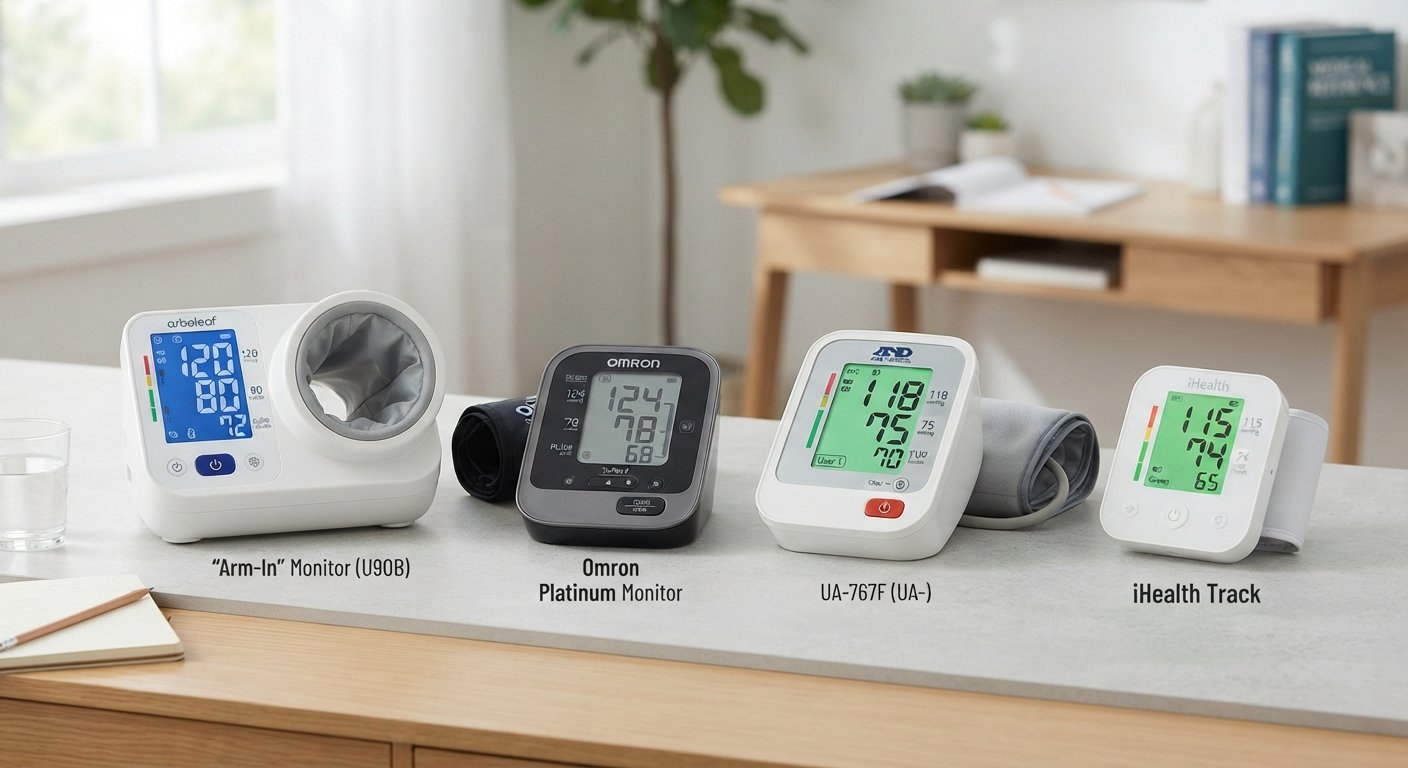
Top 4 Clinically Validated Home Blood Pressure Monitors
Choosing an accurate at-home blood pressure monitor is one of the most critical steps you can take for your cardiovascular health. However, the market is full of devices that promise accuracy but fail to deliver consistent results.
To help you cut through the noise, we have profiled the top four clinically validated monitors on the market. These selections prioritize professional-grade accuracy, distinct user features, and ease of use.
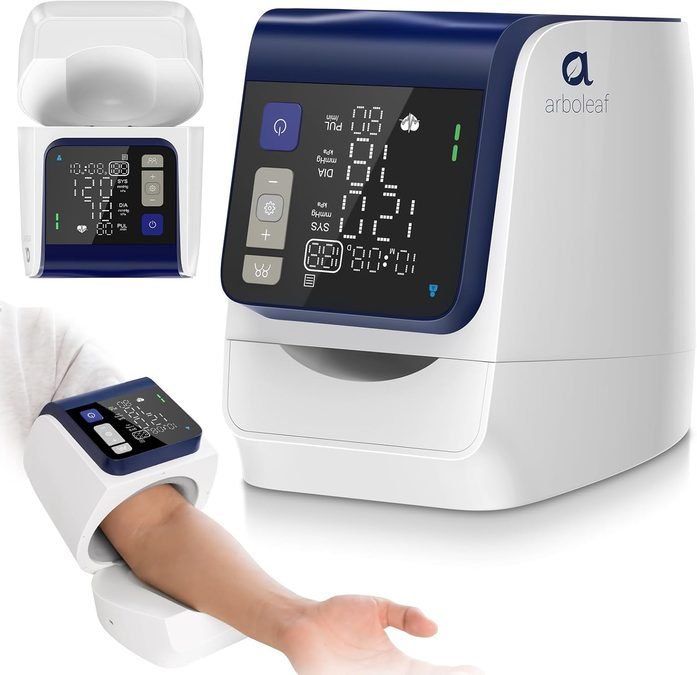
1. Arboleaf “Arm-In” Blood Pressure Monitor (Model U90B)
Best for Seniors & Foolproof Cuff Placement
Traditional monitors require wrapping a soft fabric cuff around your arm, lining up a tiny arrow with your artery, and velcroing it securely. Getting this placement wrong can cause significantly inaccurate readings. This monitor completely solves that frustration with its innovative, built-in barrel cuff design.
Instead of wrapping a cuff, you simply slide your bare arm directly into a pre-shaped cylinder, rest your elbow comfortably, and press a single button to start. This setup makes it an excellent choice for older adults, individuals with limited mobility, or anyone who struggles with standard soft cuffs. It is clinically validated for true ±3 mmHg pressure precision, ensuring dependable data tracking.
- Key Features: Features a massive memory bank that stores up to 199 readings for 4 separate users, handles 3-reading data averaging, and runs on either AA batteries or a USB-C cable.
- Important Considerations: At over 3 pounds and with a larger, rigid structure, this is a premium tabletop health station that takes up a decent amount of counter space and is not designed for travel.
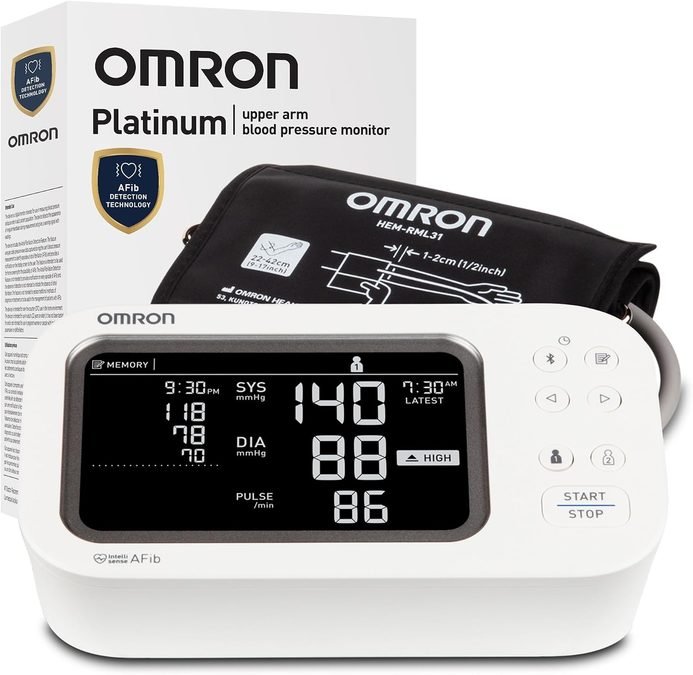
2. Omron Platinum Upper Arm Monitor
The Gold Standard for Premium Accuracy
For a reading closest to what you would get at a doctor’s office, this model is a premier choice. Fully validated by official medical registries, it is highly trusted by cardiologists for consistent baseline tracking.
What sets this device apart is its specialized triple-reading technology. Instead of relying on a single snapshot of your blood pressure—which can be thrown off if you shift your weight or take a deep breath—it automatically takes three consecutive readings a minute apart and calculates the average. It also features a dual LCD screen so you can view your current reading side-by-side with your previous one, making it incredibly easy to see trends.
- Key Features: Includes built-in irregular heartbeat detection to flag potential rhythm issues early, and offers Bluetooth syncing for digital record keeping.
- Important Considerations: The physical base is relatively bulky, making it better suited for a permanent place on your nightstand rather than a travel bag.
3. A&D Medical Premium Upper Arm Monitor (UA-767F)
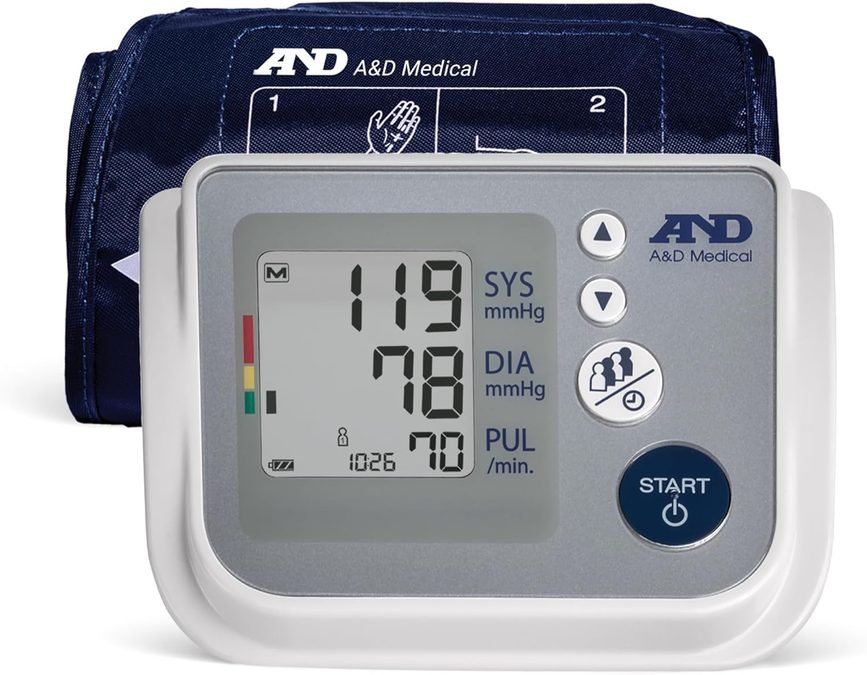
The Clinical Workhorse Built for Families
While less focused on flashy consumer technology features, this monitor is a long-standing favorite among medical institutions and independent testing labs because it prioritizes strict baseline data accuracy.
One of the biggest hurdles with at-home testing is that the painful, tight pinching of an inflating cuff can cause temporary anxiety, spiking your heart rate and causing a falsely high reading. This monitor solves this with a uniquely shaped, uniform-inflation cuff that fills smoothly and comfortably. It is also an excellent multi-user option, keeping records isolated so data never gets mixed up.
- Key Features: Institutional-grade reliability with a highly straightforward interface that allows up to four separate users to save their history natively on the device without needing a smartphone.
- Important Considerations: It sports a clinical, utilitarian aesthetic rather than a sleek, modern lifestyle look.
4. iHealth Track Smart Upper Arm Monitor
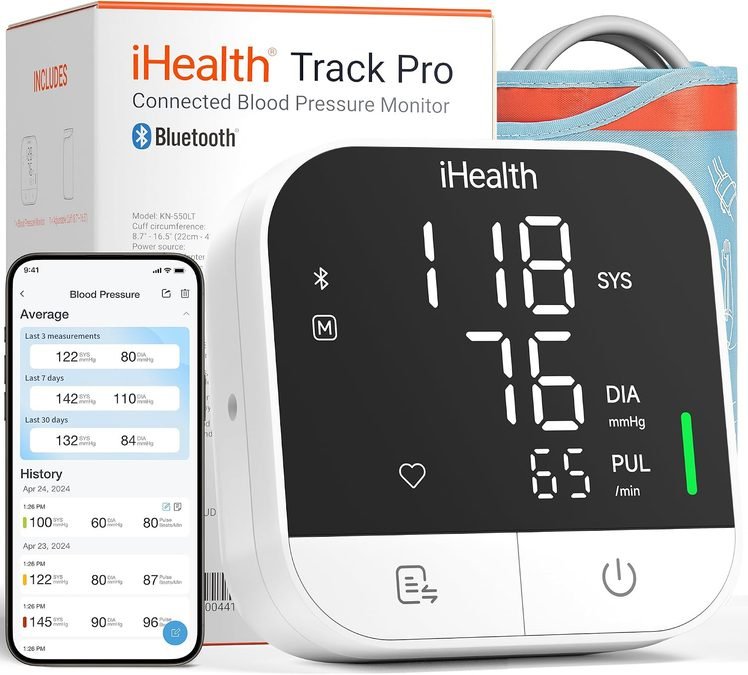
The Best Accurate Option on a Budget
For a reliable monitor that covers all the essential safety metrics without a premium price tag, this device is an incredibly efficient option that remains fully clinically validated for precision.
The standout feature here is immediate visual simplicity. The large display screen is completely color-coded based on the American Heart Association’s guidelines. Once your reading is done, the screen backlight turns Green for normal, Yellow for elevated, or Red for high blood pressure, giving you instant situational awareness without forcing you to memorize medical charts.
- Key Features: Lightweight, compact, highly affordable, and connects seamlessly to mobile devices via Bluetooth for digital health logging.
- Important Considerations: The physical device only holds 99 readings in its internal memory per user before it starts overwriting older data, meaning you will want to sync it to the app for long-term history.
What Makes a Home Blood Pressure Monitor Accurate?
Not all monitors are created equal, even if they all claim to be “clinically accurate” on the box. Here’s what actually matters.
Validation and Certification
Look for monitors that have been clinically validated by recognized organizations, such as the FDA in the U.S. or the European Society of Hypertension (ESH) and European Society of Cardiology (ESC). These groups test devices against real clinical standards, not just marketing claims.
If a monitor doesn’t list any validation, that’s a red flag. Skip it.
Oscillometric vs. Manual Measurement
Most home monitors today use oscillometric technology. This means the cuff automatically detects vibrations in your artery walls and calculates your blood pressure digitally — no stethoscope required.
Manual monitors (the kind with a pump bulb and gauge) can be more precise in trained hands, but they take practice. For most people at home, a validated oscillometric monitor is the more reliable, practical choice.
Cuff Size and Fit
This one trips up more people than you’d expect. A cuff that’s too small or too large for your arm can throw off your reading by 10 mmHg or more.
Most monitors come with a standard cuff, but many offer different sizes too. Measure your upper arm circumference before buying, and double-check it matches the cuff’s recommended range.
Display and Data Storage
A clear, easy-to-read display matters more than you’d think, especially if you’re checking your numbers first thing in the morning without your glasses on. Look for monitors with large, bright screens and the ability to store multiple readings. Some even track readings for different users, which is handy in a shared household.
What Else Should You Consider Before Buying?
Accuracy is the priority, but a few other factors can make or break your daily experience with a monitor.
Ease of Use
If a monitor is confusing to set up, you probably won’t use it consistently. Look for one-button operation and a simple screen layout.
Connectivity Features
Many modern monitors connect to smartphone apps via Bluetooth. This lets you track trends over time and share data with your doctor instantly. It’s a genuinely useful feature if you’re managing a chronic condition.
Battery Life and Portability
Some monitors run on batteries, others plug in. If you travel often or want to take your monitor to appointments, battery-powered models with a compact design are worth considering.
Price and Warranty
Validated monitors typically range from $30 to $100. Spending more doesn’t always mean better accuracy, but a solid warranty (look for at least one to two years) gives you peace of mind if something goes wrong.
Customer Reviews
Real-world reviews can reveal issues that specs don’t, like a monitor that’s finicky to pair with Bluetooth or a cuff that wears out quickly. Read a handful before committing.
What Mistakes Mess Up Blood Pressure Readings?
You could own the best monitor on the market and still get inaccurate readings if you’re not using it correctly. Here are the most common culprits.
- Wrong cuff placement. The cuff should sit directly on bare skin, positioned at heart level — not over clothing, and not too high or low on your arm.
- Bad timing. Readings taken right after exercise, caffeine, or a stressful phone call will skew high. Try to measure at the same time each day.
- Not resting first. Sit quietly for five minutes before measuring. Jumping straight from a walk to the cuff won’t give you an accurate baseline.
- Talking or moving. Even chatting during the test can raise your reading. Stay still and quiet.
- Worn-out cuffs. Over time, cuffs lose elasticity and can give inconsistent results. Replace them if they look stretched or damaged.
How Can You Get the Most Accurate Readings at Home?
Good habits make just as much difference as a good device. Here’s what actually helps:
- Set a routine. Measure at the same time each day, ideally morning and evening.
- Get comfortable. Sit with your back supported, feet flat on the floor, and arm resting at heart level.
- Keep a log. Write down your readings, or use an app, so you can spot patterns over weeks and months.
- Share with your doctor. Bring your log to appointments. Trends matter more than any single reading.
- Maintain your equipment. Replace batteries and cuffs when needed, and recalibrate if your monitor supports it.
Bringing It All Together
An accurate home blood pressure monitor is one of the simplest tools you can use to stay on top of your health. But the device is only half the equation — proper technique is what turns a good monitor into a reliable one.
If you’re shopping for a new monitor, start with validation status, then check cuff fit and ease of use. From there, build a consistent routine and keep your doctor in the loop. Small, steady habits like these add up to real peace of mind over time.
Frequently Asked Questions
Which brands make the most accurate home blood pressure monitors?
Omron and Withings are among the most commonly cited brands for validated accuracy, thanks to models that meet FDA and ESH/ESC standards. Always check for specific model validation rather than relying on brand name alone.
How much does an accurate home blood pressure monitor cost?
Most validated monitors range from $30 to $100. Higher-end models often add Bluetooth connectivity and app tracking, but price alone doesn’t guarantee better accuracy.
How often should I check my blood pressure at home?
If you’re managing hypertension, checking once in the morning and once in the evening is a common recommendation. Ask your doctor for guidance specific to your condition.
Can wrist monitors be as accurate as upper-arm monitors?
Upper-arm monitors are generally considered more accurate because they measure closer to the heart. Wrist monitors can work well if positioned correctly, but they’re more sensitive to technique errors.
What should I do if my home readings don’t match my doctor’s readings?
Bring your monitor to your next appointment so your doctor can compare it against their equipment. This helps confirm whether your device is accurate or if your technique needs adjusting.